Trance-culturación

Escrituras etnográficas y estéticas de sobrevida


Cada semana, acá voy a postear un fragmento de algún texto reciente o no tanto con el enlace a la versión completa. Hoy empezaremos con un ensayo que acaba de salir en el bello libro editado por Rafael Arce y Julieta Yelín, Literatura y posthumanismos, que pueden bajar haciendo clic acá.
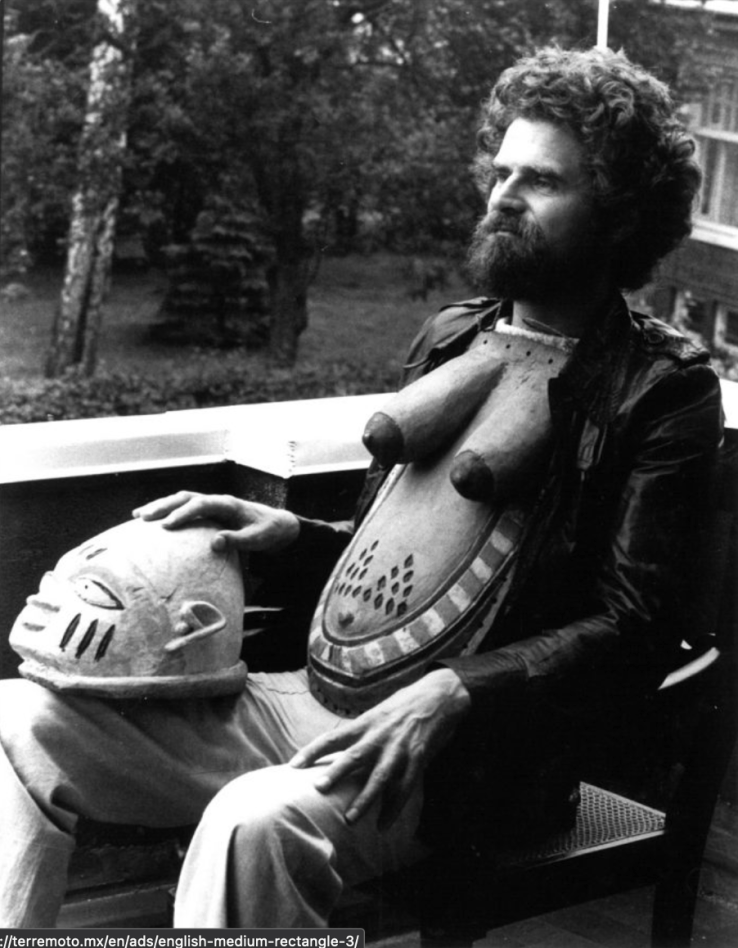

“Trance / Baño de piedras / Comida de perro / Epidemias / El antiguo testamento / Tobossi / El árbol sagrado / Lengua secreta / Oro viejo / Tabúes…”,[1] da comienzo el escritor, periodista y etnógrafo judío-alemán Hubert Fichte a una extensa sección en verso, escrita a modo de conjuro en la mitad de Explosion, su “novela de etnología” –así el subtítulo– que iba a convertirse en el punto alto de su monumental e inacabada Geschichte der Empfindlichkeit (Historia de la sensibilidad), un proyecto de 24 volúmenes. En la novela de más de 800 páginas que Fichte terminó mientras agonizaba en un hospital, tras una fracasada operación de emergencia, cuenta sus largos años deambulando por Brasil en busca de los saberes sagrados de las religiones espiritistas afrodescendientes y amazónicas, a la vez que recorría el underground gay de Rio, Bahia y Manaus durante la fase más brutal de la dictadura militar. El citado pasaje de Explosion, que se ajusta al incesante staccato de una escritura en presente, a primera vista parece llevar al lenguaje la propia experiencia de éxtasis que persigue la novela. Sin embargo, como sucede con frecuencia a lo largo del texto, el acceso directo a la presencia epifánica es negado, o más bien aplazado, ya que pronto se revela que el pasaje que estamos leyendo no es sino el compendio de otro texto, un estudio sobre el templo vudú Casa das Minas, en São Luiz do Maranhão, que el narrador de Fichte encontró en una librería de usados en Copacabana. Aun así, vale la pena preguntarnos si la invocación poética que hace Fichte del trance, pese a sus mediaciones, no está todavía cautiva de la presencia extrema a la que está llamando. Y esto, en consecuencia, ¿no podría ser así porque que el trance, de hecho, es en sí mismo un modo de escritura mental y porque cada reiteración es fundamentalmente una invocación de cuantas la han precedido, al igual que de los múltiples autores, no siempre humanos, que esa “intertextualidad” pone en juego? ¿No es también el trance, entonces, un modo peculiar de “estética medioambiental” que se abre a la presencia de una trama de agenciamientos de humanos, animales y plantas, de ancestros y seres de la tierra y del cielo, de historias vividas y por venir? “Con tohé no alucinas, distinto es”, dice Ruth Cárdenas, la esposa del brujo Don Javier de César Calvo, otro escritor etnólogo, en Iquitos: “Con tohé ves todo natural, bien real, igualito, solamente que es otra clase…”[2]

Aunque no está en el texto, el trance como umbral hacia otro modo de ver el mundo (una Weltanschauung) atraviesa la novela de Fichte y también la de Calvo, como veremos. Esto es lo que provee a estas “novelas de etnología” de su ausencia estructurante, de su “significado trascendental”, para decirlo con un concepto clave de Jacques Derrida en su clásica crítica de Claude Lévi-Strauss.[3] El trance, en efecto, es la différance de un tipo de escritura que sugiero llamar “trance-culturación narrativa”, en un no tan involuntario juego de palabras con la influyente noción de Ángel Rama que se ha convertido en un pilar de los estudios literarios y culturales latinoamericanos. Como recientemente nos recuerda Héctor Hoyos, “transculturación narrativa” es en sí mismo un concepto que Rama trasladó al campo de la literatura a partir de la antropología materialista de Fernando Ortiz.[4] Es, por lo tanto, un concepto notablemente perfomativo pues lleva a la práctica (analítico-textual) aquello que al mismo tiempo atribuye a sus referencias literarias: concretamente, un tipo de escritura que, en la clásica síntesis de Rama, logra “reintegrarse” a la “comunidad lingüística propia” –léase: el medio rural, campesino o indígena al que “retorna”– solo para poner en funcionamiento su “sistema lingüístico”. Bajo esta formulación, el escritor “no procura imitar desde fuera un habla regional sino elaborarla desde dentro con finalidades literarias”.  Al transculturador, concluye Rama, le importa “trabajar las posibilidades que le abre su propio comportamiento lingüístico para construir a partir de él una lengua literaria, específica de la creación artística”.[5] Con respecto a la transculturación narrativa, la “trance-culturación” sería, por tanto, algo así como el retorno de lo reprimido, vale decir, de la “etnología”, que desembarca con presencia propia en la “lengua literaria” y en el aparato conceptual construido a partir de ella. La trance-culturación sucede cuando alguien (o algo) da rienda suelta al exceso material que la “lengua literaria” de la transculturación debe contener y controlar para satisfacer las “finalidades literarias”, siguiendo en cambio un tipo muy diferente de “finalidades” que involucran a los existentes humanos y no-humanos, materiales e inmateriales, cuyas exigencias sobre el texto desafían –y a menudo superan– las del género literario, del estilo, del ritmo.

En este capítulo voy a indagar las posibilidades de los conceptos de trance y trance-culturación, como herramientas para una crítica que apuesta a los pactos imaginativos con lo más que humano, abriendo camino hacia la configuración de nuevos mundos en común. Para desentrañar estos potenciales, sin embargo, quizás tengamos que abandonar la idea misma de “medioambiente”, ya que –como explica el pajé y activista Yanomami Davi Kopenawa– “lo que los blancos llaman así [medioambiente] es lo que queda de la tierra y la floresta heridas por sus máquinas. Es lo que queda de lo que destruyeron hasta ahora. No me gusta esa palabra medio. La tierra no debe ser recortada por la mitad”.[6] Quiero sugerir que el trance como ruptura de los límites del cuerpo y de la especie, y de ahí como una reconstelación de alianzas entre existentes en un devenir torrencial, es también una forma de cerrar la herida de la violencia extractiva que, como una grieta, ha sido abierta sobre “la floresta y la tierra”, volviendo a sumergir lo humano no en “medioambientes”, sino en una extensa matriz de individuaciones, siempre al borde de precipitarse hacia la otredad con que se alía. Lo que me interesa, al menos como propósito de este ensayo, no es sin embargo la dimensión sensorial o psicodélica del trance sino más bien su “asombrosamente rico contenido teórico”, siguiendo a Mircea Eliade en su clásica etnografía del shamanismo siberiano y ártico:[7] la excepcional operación conceptual que el trance realiza en tanto análisis (no-occidental) de la in-mundizaciónque subyace a los momentos de crisis individuales y colectivas. Gilles Deleuze, en su clásica discusión del cine de Glauber Rocha, veía en el trance “una transición, un pasaje, o un devenir” que suspende la continuidad diegética con el fin de “producir enunciados colectivos capables de elevar la miseria e una extraña positividad: la invención de un pueblo”[8] – un pueblo, deberíamos agregar, que la producción estética latinoamericana de los siglos veinte y veintiuno nos incita a imaginar no sólo como comunidad humano, sino como un tipo de communitas transespecie sublevada frente al pacto “inmunitario” del capitalismo extractivo.[9] Aquí, en cambio, propongo enfocarme en un campo diferente (si bien relacionado) de diálogos entre la etnología especulativa y el shamanismo visionario, en busca de describir el trance como un incesante productor de alianzas frente a la catástrofe de la in-mundización. Por brevedad, me limitaré al medio de la escritura, lo cual a primera vista parecería extraño, una vez que la danza, el sonido y el performance se acercan mucho más a las formas rituales del trance. Retomaré, primero, la noción de “trance-culturación” formulada en los párrafos anteriores, para luego subir la apuesta al proponer la idea del trance como forma de escritura ella misma –una écriture que atraviesa los límites de las especies y los existentes, y por tanto también un lugar de debate y (potencialmente) de conocimiento en materia de sobrevida. [Para seguir leyendo, bajar libro acá]


[1] Fichte, Explosion, 436. Salvo indicación contraria, las traducciones al castellano son mías.

[2] Calvo, La tres mitades, 54.

[3] Derrida, “La structure…”: 411.

[4] Hoyos, Things With a History, 9.

[5] Rama, “Los procesos de transculturación”, 238.

[6] Kopenawa y Albert, A queda do céu, 484.

[7] Eliade, Shamanism, 14.

[8] Deleuze, The Time-Image, 222.

[9] Andermann, Tierras en trance, 21-22.

Aesthetics and the Planetary Turn

From: Handbook of Latin American Environmental Aesthetics, ed. Jens Andermann, Gabriel Giorgi, and Victoria Saramago (Berlin, New York: De Gruyter, 2023), “Introduction”

(…) What the contributions to this volume are after are the multiple reconfigurations of bodies and environments within the geology of late capitalism, the moment when, as Déborah Danowski and Eduardo Viveiros de Castro put it, the “transformation of humans into a geological force, that is, into an ‘objective’ phenomenon or ‘natural’ object, is paid back with the intrusion of Gaia in the human world, giving the Earth System the menacing form of a historical subject, a political agent, a moral person.” Such an entanglement of agencies, they conclude, also entails an “inversion of the relationship between figure and ground, the ambiented becomes the ambient […] and the converse is equally the case” (Danowski and Viveiros de Castro 2017, 14).

What we call environmental aesthetics is lodged in the very moment of inversion called out by Danowski and Viveiros de Castro. Aesthetics is a concept that, at least since its re-introduction into modern critical thought by Alexander Gottlieb Baumgarten in the early eighteenth century, has been deployed as both referring to the sensory and imaginative experience of beauty—and thus also to a mode of accessing truth by way of “sensible discourse” rather than logical reasoning, in Baumgarten’s (1954, 6-10) expression—and as the “science of perception” that asks, as Kant would posit, for the general principles underwriting individual aesthetic judgements. The artwork, as it arranges the sensory in ways that strive towards perfection, thus making it accessible to “taste” as an experience of truth that is analog to yet also distinct from, critical reason, is therefore also invested with an implicit epistemic power that the discipline of aesthetics is entrusted with drawing out and making explicit. (…) Going beyond the contemplation of nature in this tradition as a vehicle for the experience of beauty or the emergence of the sublime, the “environmental” in environmental aesthetics also complicates the idealistic baggage the term aesthetics carries with it.

“Environment” is a notion first used in systematic fashion by the nineteenth-century positivist thought of Auguste Comte and Herbert Spencer, who used it to describe “the circumstances of an organism” (Bonneuil and Fressoz 2016, 173)—before, it had been deployed colloquially to refer to the surroundings of towns and cities, i.e. “the countryside.” Ernst Haeckel, in 1867, coined the notion of “ecology” highlighting the symbiotic effects among living organisms and between those and their physical conditions of existence, in response to Darwin’s notion of the struggle for survival; in early twentieth-century biology, Johann Jakob von Uexküll further developed the biosemiotic dimension of the concept as an at once perceptive and life-sustaining entanglement between organisms and their surroundings. Yet, as David Arnold (1996) has shown, environmental determinism had already informed Western thought long before it became a systematic concept in its own right, underwriting and justifying imperial expansion and the enslavement and forced migration of non-Europeans, including in Montesquieu’s and Buckle’s climatology or the biological racism of Gobineau and Malthus.[1] Nonetheless, and despite having been trained by late twentieth-century strands of thought such as poststructuralism, deconstruction, feminism and performance theory to be suspicious of all appeals to “nature” as the ultimate cause of, and normative benchmark for, human action, the surge of the planetary as encountered in Williams’s film (and in myriad forms of environmental emergency) also forces us today to double down on this critique of “nature” and rethink the agentiality of the nonhuman in different ways. For if “Gaia,” the earth system, or the “more-than-human” are no longer just objects of perception and of sensory pleasure, as Danowski and Viveiros de Castro contend, but have shown themselves to be agential, and thus also perceptive, in their own right, do we not need now to rethink the aesthetic itself as the fragile and precarious field of encounter, or even of “sympoiesis” (in Donna Haraway’s expression), between diverse existents engaged in imagining and in crafting a shared “becoming-with” (Haraway 2016, 4; 58)?

The essays assembled in this volume take stock of the lines of critical revision and of the terms and concepts that have emerged in recent years in response to this question. Two principal tasks, in fact, seem to articulate the main coordinates at work in environmental aesthetics: on the one hand, to reconfigure the sensorium that allows us to imagine, perceive, narrate and think the passage from the global to the planetary; on the other, to re-conceptualize aesthetics—in a tradition that also involves the avant-garde as well as posthuman thinking—in a way that allows us to disrupt received notions of aesthetics and make room to other arrangements of the sensible that register the agency of the non-human and the non-living. Stengers’s “intrusion of Gaia” and the now-ubiquitous notion of the Anthropocene—referring to the “major and still-growing impacts of human activity on earth and atmosphere” (Crutzen & Stoermer 2000, 17) to the point of becoming the dominant geological force of our age—as well as rival ones such as Capitalocene, Plantationocene, Gynocene or Chthulucene (all of which attempt to call into question the residual humanism of Anthropocene theory) are challenging the very foundations of modern Western aesthetics, politics and theory as premised on the ontological distinction between humanity (and hence “culture”), on the one hand, and of nonhuman “nature”, on the other (Latour 1993, 10; 32). Whichever position we choose to take with regard to its key concept, “the Anthropocene debate”—as postcolonial historian Dipesh Chakrabarty (2021, 155) contends—“thus entails a constant conceptual traffic between earth history and world history,” and to help enable such traffic by way of new concepts and paradigms at a time of advancing deterioration of the biosphere and unprecedented mass extinction at a planetary scale is the urgent task that has been set for environmental aesthetics.

Such an endeavor must of necessity be at once critical and speculative. In the former sense, it has to revisit the archive of modern arts and literature as well as that of the responses aesthetic theory has crafted from these, in order to understand their impact on, and even complicity with, the establishment and policing of the modern nature-culture boundary. In a compelling, hard-hitting book, Indian novelist and literary scholar Amitav Ghosh suggests that canonical forms of Western modernism such as the realist novel and abstract art have been of fundamental importance for establishing the primacy of human “current affairs” over their cataclysmic, short as well as long-term, entanglements with cosmic forces. The exceptional, the wondrous, “the unheard-of and the unlikely [that] fiction delighted in” prior to the emergence of realism, he suggests, have been banished in modernity to the B-genres of sci-fi and fantasy, with abstraction upping the stakes even further in eliminating reference altogether and placing “human consciousness, agency and identity […] at the center of every kind of aesthetic enterprise” (Ghosh 2016, 16; 120). Yet ecocritical approaches, particularly in the realm of literature, have also sought to re-appraise the areas and forms of dissidence that have always accompanied these hegemonic frameworks, attempting to track—in Richard Kerridge’s early description of the field—“environmental ideas and representations [and] to evaluate texts and ideas in terms of their coherence and usefulness as responses to environmental crisis” (Kerridge 1998, 5).

However, in addition to the important and necessary project of re-assessing the androcentric founding premises of modern aesthetics, and thus also of the histories of literature, art and film that underwrite the critical frameworks of our academic disciplines, environmental aesthetics as the two-way traffic between artistic production and the critical thought that draws out its interfaces with wider, socio-cultural as well as earth-systemic developments, is also in the business of imagining things differently—of mobilizing the powers of speculation to imagine but also create other ways of inhabiting the planet. The arts, as environmental humanities scholar Carolyn Merchant contends, “are an essential part of creating the large-scale public awareness and understanding of climate change that can bring about policy change,” in challenging “the standard human/environment narrative, in which humans are both privileged over other species and separate from nature. Indeed, artists can change the way we think about the meaning of progress” (Merchant 2020, 46). An aesthetics of and in the Anthropocene, as literary critic David Farrier suggests referring to a line from Irish poet Seamus Heany, must open up and inhabit “the rift between what is going to happen and whatever we wish to happen […] In doing so, it can point us to a careful retying of the knots that bind us together, in deep time, with the fate of the Earth” (Farrier 2019, 128). Indeed, if the speculative efforts of the epistêmê aisthetikê—the “science of what is sensed and imagined,” in Baumgarten’s (1954, 86-87) definition—will now have to be re-oriented towards “reading for the planet,” in energy humanities scholar Jennifer Wenzel’s (2020, 1) powerful expression, such “world-imagining” through and with art might also require us to expand our very notion of the artistic beyond conventional genres and expressive languages and toward the “sites of expanded creativity” that are in the business of “the experimental practice of world-making,” in art theorist T. J. Demos’s words. The environmental aesthetics, Demos suggests, concern themselves with the expanded field of “creative ecologies—practices that make new sensible materializations and connections (aesthetic, practical, jurisgenerative) between otherwise discrete realms of experience and knowledge, and that cultivate worlds to come” (Demos 2020, 18). On this note, literary scholar Florencia Garramuño has put forward the notion of “unspecificity” as a way of thinking about how contemporary aesthetic production, in novel and heterogeneous alliances with other realms of social practice that modernist aesthetics had kept separate from the domain of art as distinctive and “autonomous” from these, imagines and thus calls into being, “worlds-in-common”: unspecific aesthetics, for her, is the elaboration of “a language of commonalitythat encourages the invention of diverse modes of disbelonging” as the shared condition of existents in thrall to planetary crisis (Garramuño 2015, 26). Anthropologists Marisol de la Cadena and Mario Blaser have suggested the notion of “the uncommons” to account for this paradoxical togetherness of diverse agents brought about by their shared exposure to climate breakdown and mass extinction, an allyship that necessarily relies on the creative faculty of humans and nonhumans alike to be willed into being. The uncommons, then, is “the heterogeneous grounds where negotiations take place toward a commons that would be a continuous achievement, an event whose vocation is not to be final because it remembers that the uncommons is its constant starting point” (Blaser and De la Cadena 2017, 19). In different ways, these voices resonate and dialogue with a persistent theme in the twentieth-century Latin American intellectual tradition.


[1] See also Bonneuil and Fressoz’s chapter on the “Polemocene” for a more nuanced history of proto-ecological ideas in the West beyond biological and climate determinism (Bonneuil and Fressoz 2016, 253 ff).

For more details on the Handbook, click here.

To visit the Table of Contents, click here.

To buy or access through a library, click here.

El giro fascista: cinco hipótesis

Texto completo en el Blog del Journal of Latin American Cultural Studies

integralismo

(Cartel de Ação Integralista Brasileira, años 30)

Como la explosión de un absceso purulento, la victoria con más del 55 % en las elecciones presidenciales brasileñas de un candidato abiertamente racista, misógino y homofóbico, defensor entusiasta de dictaduras y de la tortura de opositores, partidario de soluciones eugenésicas para indígenas y afrobrasileños a quienes ha tildado de hediondos, ignorantes y criminales –cuando no directamente de cualquier disidencia política, religiosa o cultural– produce al menos un efecto saludable de sinceramiento. Porque no solo, como era de esperar, no perdieron tiempo en celebrar la llegada a sus filas del Führer tropical los Trump, Salvini, Le Pen, Orban — la lista podría alargarse infinitamente. También las educadas y cosmopolitas “derechas democráticas” de nuestras republiquetas vecinas, cuyas loas cantaba hace apenas unos años el editorialismo de cuello blanco, se aprestaron por hacer constar, por si quedaba alguna duda, de que también ellas, por supuesto, habían militado desde siempre en la falange donde reviste el reservista vencedor. Era uno más del palo el verdeamarillento, sacaban pecho los Piñera, los Macri, los Cartes; verdadero visionario –se emocionaba el canciller argentino Faurie ya tras la primera vuelta– con el ojo puesto en el futuro y no en el pasado. Pero si era tanto el apuro de los hasta anoche vestales del republicanismo pampeano por probarse la camisa marrón antes de que se las arrebate el primer hijo de carnicero, ¿no se cae por su propio peso la teoría de los dos demonios, previsiblemente desempolvada por personajes nefastos como el ex-presidente FHC? En declaraciones a la Folha el ex-sociólogo hacía saber que, contrario a lo que las incontinencias del personaje parecieran indicar, los brasileños no habían depositado su fe en un nazi confeso, ni siquiera un fascista, no: apenas un “autoritario”, esa mágica palabra-coartada que ya le había rendido tan buenos servicios, a FHC y sus socios, en los viejos buenos tiempos de la “transición democrática”. Y cuyo diagnóstico, como seguramente no tardarán en rematar los Vargas Llosa, los Castañeda y otras viudas del neoliberalismo noventista, ¿no había sido comprobado, precisamente, por la reciente elección mexicana de otro demagogo carismático, no importa que de prédica diametralmente opuesta a la del capitán carioca? ¿La culpa no será, por tanto, y como era de esperar, del infame populismo, ese que ahora se lame sus heridas cuando había desatado él mismo la bestia que ahora lo devora? ¡Ya está en los quioscos! — solo que, por más que la repitan, esa tierna fábula liberal de aprendices de brujos no deja de chocar con el sencillo hecho de que los votantes del ex-militar y los del ex-alcalde de la capital azteca no son en su inmensa mayoría los mismos, como tampoco lo son los del ex-obrero metalúrgico: si fuera solo por el voto de los favelados, los nordestinos, los sectores de menos recursos –la plebe, en suma– Haddad habría ganado de manera contundente. En cambio, ya lo han dicho voces más calificadas, los problemas empiezan cuando los que ya no quieren pertenecer a ese pueblo populista, esas proverbiales cuarenta millones de ex-pobres, “la nueva clase media de Lula”, se desmarcan de esa alianza con la violencia propia de los conversos. Pero si ése es el eje por el que gira el giro fascista: ¿qué expresa la aceleración vertiginosa de su espiral violenta? ¿Hacia donde apunta su odio?

Leer texto completo en blog del Journal of Latin American Cultural Studies