El cine de la sobrevida

Cada semana, acá voy a postear un fragmento de algún texto reciente (y a veces no tanto) con el enlace a la versión completa. Hoy seguiremos con mi reseña de Nuestra tierra, la última película de Lucrecia Martel, que acaba de salir en el portal de la revista Kilómetro 111 (versión completa acá).

La cámara que sube por los aires, a vuelo de pájaro o incluso a bordo de un satélite orbitando la Tierra señala, en Eureka (2023) de Lisando Alonso y en Nuestra tierra (2025) de Lucrecia Martel, un giro hacia lo planetario, hacia las formas de destrucción y sojuzgamiento a las que, en un hemisferio como en el otro, han sido sometidos el monte, la selva y las praderas poniendo en peligro la continuidad misma de lo viviente. Pero en ambos films, lo que importa de verdad es hallar ahí abajo, en las pocas zonas en donde el verde no ha retrocedido aún ante las geometrías rígidas de agroindustria, minería y urbanización, los lugares de una sobrevida que tiene la forma de un constante redevenir-Indígena, en la expresión de Déborah Danowski y Eduardo Viveiros de Castro. Casi veinticinco años después de La libertad y La ciénaga, ambas estrenadas en 2001, donde forjaban desde geografías y poéticas fílmicas prácticamente opuestas una mirada sobre los márgenes de exclusión del ciclo neoliberal anterior en Argentina, en sus películas más recientes los dos directores más singulares de lo que fuera consagrado entonces como el “Nuevo Cine Argentino” se han volcado, de manera mucho más abiertamente política, a las luchas contra el etnocidio y el destierro que atraviesan de punta a punta a Abya Yala y a Turtle Island. Vuelo y aterrizaje: en los films más recientes esa dinámica entre espacio y lugar, si bien se plasma nuevamente en formas narrativas e incluso genéricas que no podrían ser más diferentes, inscribe esa tensión entre lo cada vez local y singular de las luchas por la tierra y la dimensión planetaria que, no obstante, hilvana todas esas singularidades (literalmente, en el caso de Eureka donde el vuelo de la cigüeña jabirú anuda los episodios separados en tiempo y espacio) como la cuestión candente de nuestra época.

Los dos films, asimismo, se construyen a partir y en contra de imágenes que ubican a lo Indígena como otredad arcaica y malvada, como obstáculo a ser removido, por la fuerza si es necesario, para que siga su curso el avance providencial de la Historia. Pero si Eureka comienza con un pastiche de la épica violenta del western clásico, solo para desmentir y denunciarlo enseguida como chatarra televisiva y cortar de la mitología en blanco y negro de los vencedores al color y al suplicio de los sobrevivientes en la intemperie de la reserva, Nuestra tierra parte de otro tipo de filmación, en tiempo real, para extenderse de ahí a temporalidades históricas y biográficas más largas, atravesando generaciones e incluso siglos. Se trata, nada menos, de las imágenes grabadas por uno de los perpetradores –Sergio Amín, “el Turco”, latifundista y minero tucumano– del asesinato de Javier Chocobar, cacique de la comunidad diaguita de Chuschagasta, ocurrido el 12 de octubre de 2009 en la localidad de El Chorro, a medio camino entre la capital provincial y el límite con Salta. Es hacia ahí que se dirigía, aquel día fatídico, el terrateniente (que también cobraba un sueldo como asesor de la división provincial de patrimonio histórico), acompañado por Luis Humberto “El Niño” Gómez y Eduardo Valdivieso, dos ex policías e integrantes de fuerzas paramilitares, al encuentro del grupo de comuneros que solían vigilar y registrar fotográficamente las incursiones a las tierras sobre las que habían presentado ya cantidad de recursos y amparos legales. Fuertemente armados, Amín y sus guardaespaldas también habían traído al encuentro una cámara de video para registrar las “provocaciones” de los comuneros, y el encuentro de ambos bandos, aún antes de las palabras que luego derivan a los empujones y finalmente los tiros que dejan muerto al cacique y con heridas graves a otros tres campesinos chuschas, comienza como una querella de imágenes, con la cámara de Amín enfocando al comunero Delfín Cata que lo registra con su pequeña cámara análoga de fotos. La secuencia, pues, tiene características fílmicas: un plano, un contraplano – solo que, en el video, este último solo figura como ausencia marcada, con la cámara plantada firmemente atrás de Valdivieso, el ex agente, quien va al frente con actitud amenazadora exigiendo explicaciones y, acto seguido, saca su pistola y empieza a disparar, primero al aire y luego a matar. Es ahí que, cuando Amín se larga a correr y la cámara, colgada de su cuello, sigue grabando, el encuadre pierde foco y nitidez mientras la “acción”, fuera de cuadro, continua en la pista sonora (con una voz preguntando, como si se hiciera eco de la nuestra, “¿qué pasa? ¿qué pasa?”).

El caso Chocobar, como llegó a conocerse en los medios, tenía, pues, forma cinematográfica mucho antes de que Lucrecia Martel se interesara por él: estaba, de algún modo, hecho para las cámaras aun antes de que, deliberadamente o no, las cosas (y la cámara) se les “fueron de las manos” a Amín y sus secuaces. Es más, tenía, de algún modo, la forma cinematográfica de una película de Lucrecia Martel donde, como el tiro en el monte en La ciénaga que puede o no haber dado en el blanco, los momentos claves suelen ocurrir fuera de pantalla o al menos de la zona de nitidez que enfoca la cámara, para ser registrados de modo ominoso, incierto, por la banda sonora. De ahí que, para quienes seguíamos los films de la cineasta salteña, no se trataba tanto de volver a atar los cabos que ese desencuentro entre imagen y sonido a menudo dejaba sueltos que de aprender a convivir con una multitud de momentos y devenires paralelos que, en vez de refluir todos hacia una sola corriente principal, más bien formaban ahí motivos o constelaciones a manera de una partitura orquestal o del tejido de una manta en el telar. Así también en Nuestra tierra, aunque aquí ese juego formal de tiempos múltiples adquiere asimismo una dimensión inmediata y profundamente política: de un lado, está el tiempo teleológico del proceso judicial, al que la cámara y el micrófono de Martel asisten en clave rigurosa de un documental de observación – o más bien, los dos tiempos que activa el tribunal que recién se inicia a nueve años de la muerte del cacique, pues en su secuencia de audiencias, testimonios y “reconstrucciones” in situ, el juicio también vuelve una y otra vez, insistentemente, al tiempo y lugar del crimen que las cámaras habían fallado en captar en su momento de ocurrencia. Del otro, está la película de Martel donde, por el contrario, la falla, el desvío, se constituyen en un principio poético, en el sentido de dejarse llevar por los guiños y sobreentendidos que atraviesan el juicio y de seguirles la pista que lleva invariablemente hacia fuera de la sala de tribunal y al encuentro de otros relatos y temporalidades, ancladas en fotos de familia, ensayos musicales y en los tiempos de siembra y cosecha que marca el calendario de las fiestas religiosas. Es decir, hacia los tiempos de la tierra y del destierro, de exilios y regresos y de memorias que se hilvanan hasta formar un orden, una constelación: un lento redevenir-Indígena que acontece en conjunto y a raíz de la lucha por la tierra, en un solapamiento de tiempos que es distinto al que despliega el relato judicial y hacia el que va abriéndose Nuestra tierra.

[Seguir leyendo en Kilómetro 111]

Luis Fernando Benedit: Invisible Labyrinths

Talk at the Institute for Studies on Latin American Art (ISLAA), January 18, 2025

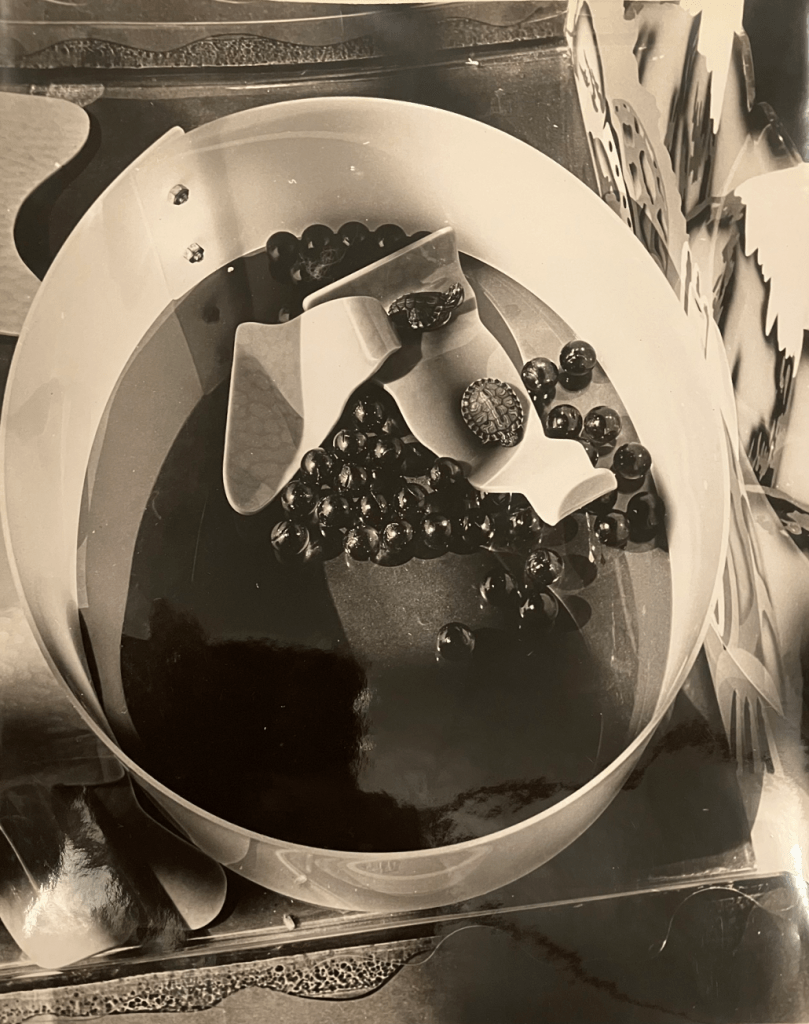
Can we take Benedit seriously? Or is his work more of a joke, a one-liner that has gone stale? Or, conversely, is there more to the lightness and humor than meets the eye? In 1968, just months before Tucumán Arde –a milestone of Latin American political art– and practically simultaneous with the first showings of Hélio Oiticica’s parangolés in Brazil, Benedit’s Microzoo show at Galería Rubbers, Buenos Aires, featured a series of pieces that adopted, as did Oiticica’s, the form of the habitat-labyrinth at the same time as it reflected on the interface between communicational stimuli and patterns of behavior. But rather than, as in Tucumán Arde, tackling these issues by attempting to short-circuit neocolonial-capitalist ideology using the disruptive strategies of avant-garde art or, as in Oiticica’s post-concretist work, wager on the sensorial immersion of the spectators-participants, with the artwork as a kind of catalyst triggering individual and collective ways of being-otherwise, Benedit’s work, at least at first glance, appeared to take us away from what Roberto Jacoby describes as the galloping race, in less than half a decade, from the formal concerns of minimalist abstraction to the outright juxtaposition of art and politics in Latin America. Microzoo, instead, contained artificial habitats for living organisms including a plexi glass anthill and other receptacles for lizards, fish and turtles, as well as small nurseries for plants in different states of germination. The provision of light and food imposed on these certain types of behavior in conditions of an artificial environment, the learning of which visitors could observe as it occurred. In Benedit’s own words:

My animal and plant habitats are biological sculptures. There is a definite relationship between the forms and their inhabitants (mice, ants, fish). They reflect both the forms I wish to create and the needs of the plants or animals for which they are intended, and thus each work can be seen on several levels. […] I think of them as ecological objects where the balance of interacting elements is created artificially. Ecology as a field of concern is important to me as an artist, as indeed it must be to anyone who has thought about it. What I am trying to do is to focus on it and draw attention to it. (Benedit 1976: 20)

Luis F. Benedit, Habitat for water turtles (1968). Courtesy ISLAA archive.
Now, this supposedly didactic nature of the habitats and labyrinths raises several questions. Who exactly is the one “learning” from the device? Is it us spectators or rather the non-human beings who adapt their lives to the conditions of the artifice? In other words, if there is something we can learn from other existents’ learning, is this lesson really about the natural order or not rather about its accomodation to artificial conditions? But also, how is this behavioral modification different from our own aesthetic response to the artwork, if plants and animals effectively forge from their encounter with the “ecological sculpture” new ways of being in the world? Are they the real connoisseurs?

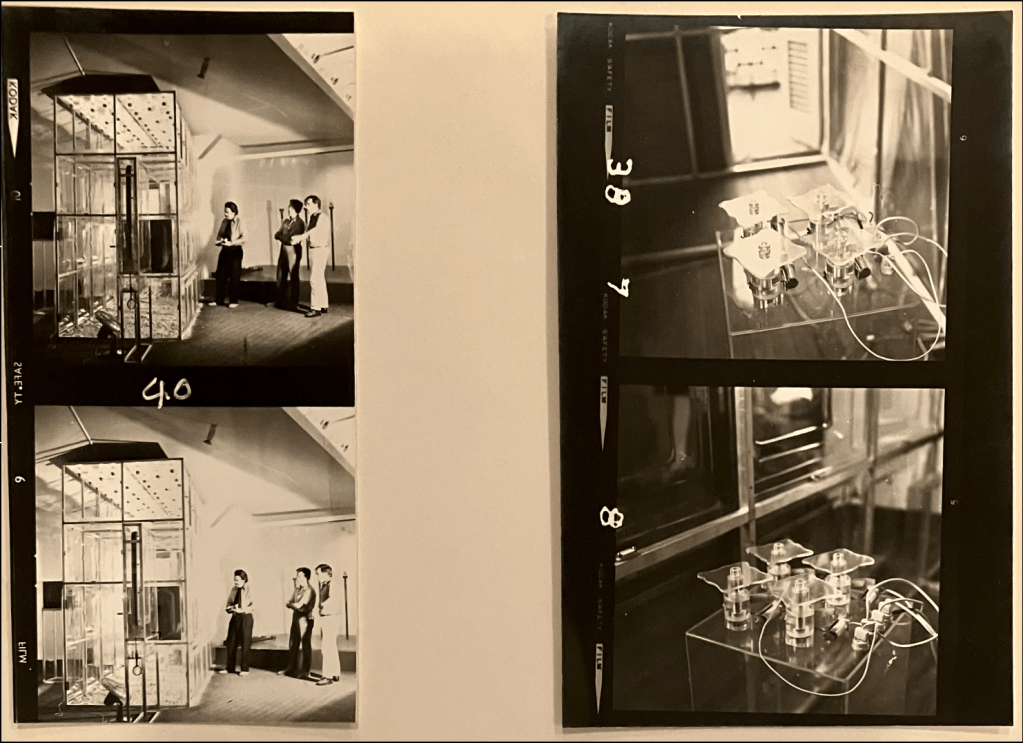
Effectively, then, we might think of the successive phases in Benedict's work as early forerunners of bioart and ecoart, and thus as “political” in their own, anachronistic fashion. In 1971, returning to Italy where he had previously completed a degree in landscape architecture, Benedit exhibited Biotrón at the Venice Biennale, created together with the biologist José Nuñez and which, after the exhibition was over, was reinstalled at the Faculty of Exact Sciences of Buenos Aires University. It consisted of a transparent plexi and aluminum frame containing at one end a transparent honeycomb with four thousand live bees for which, inside the receptacle, an “artificial meadow” with electronic flowers secreting a sugary nectar, provided nutrition. At the opposite end was an exit tube to the Biennal’s gardens, allowing the bees to choose between foraging for food outside or staying inside feeding on its artificially generated equivalent.

Installation of Biotrón at the Venice Biennial, 1971. Courtesy of ISLAA archive.

The following year, on occasion of his solo show at MoMA, Benedit premiered Fitotrón, a device where, through the manipulation of the variables of light, humidity and temperature, one could observe the plants’ reactions in their adaptation – or not – to these environmental changes, a proposal the work shared with Laberinto vegetal, from the following year, a black plexi box with germinating seeds at one end and a forty-watt lamp at the other. In their growth towards that light source, triggered by phototropic attraction, the plants had to navigate an itinerary that branched into two alternative paths (right/left), leading them either to death or survival.

Luis F. Benedit, Laberinto vegetal (Plant Labyrinth, 1972). Cover page of Projects and Labyrinths, Whitechapel Art Gallery, London, 1975.

The disconcerting, even revulsive effect these works provoke had to do, it seems to me, not just with having living beings in museums and galleries (instead of their usual places of residence in the human environment such as laboratories, gardens or zoos). Rather, it stems from the provocative confusion between artistic and scientific modes of encompassing and containing those lives. The opposition that gives this work its constitutive tension is not, or not only, that of nature and artifice; rather, it is the distinction between different forms of artifice and their respective effects of nature. Biotrón is perhaps where this difference between regimes of artificiality is most clearly marked: the point here is not there, as art historian Carlos Espartaco (1978: 13) claims, about “making [the bees] fluctuate between a natural environment (gardens) and an artificial one (the biotron)” because a garden is of course no less an artificial medium than an electronic meadow, only it belongs to a different regime of administration of the living. Rather than a contrast between nature and artifice, the Biotrón stages a reflection on the senses of the natural that a certain artificial order entails. Between the artificial landscape of the garden and the electronic meadow, we move from a relationship mediated by representation as imitation to one of substitution of certain relations and functions, that is, to what Tom Mitchell calls “the age of biocybernetic reproduction” (Mitchell 2003: 483-84).

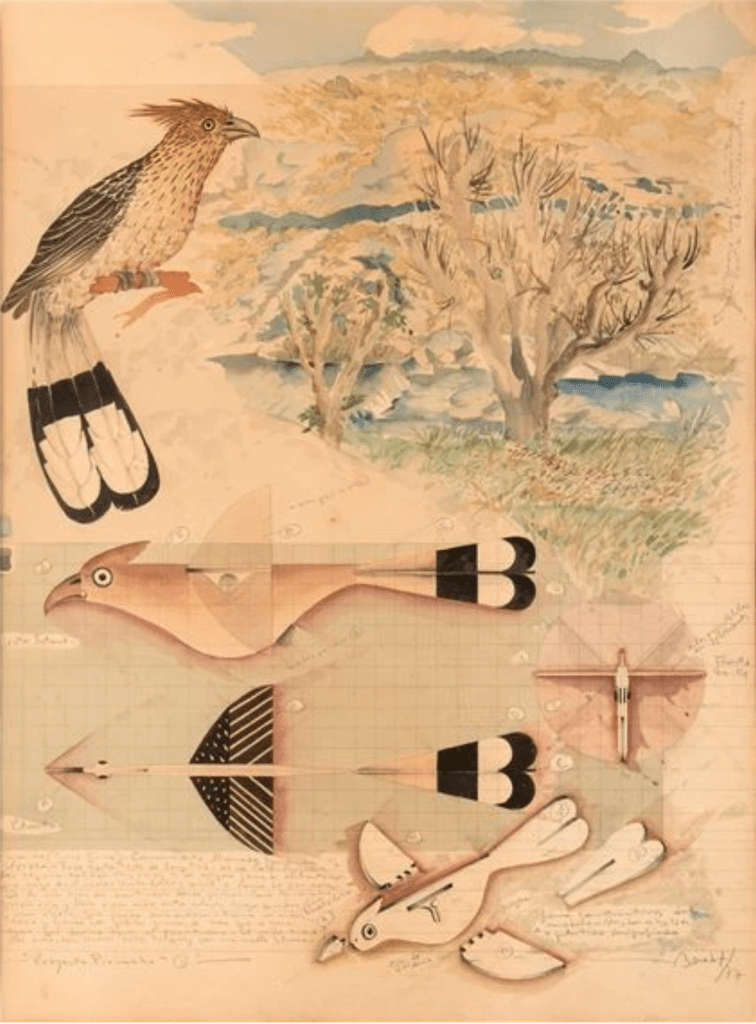
Luis F. Benedit, Proyecto Pirincho I (1977). Pencil and watercolor. Courtesy of ISLAA.

In his later work, Benedit would highlight this archaeological dimension of investigating the modern regimes of nature. After Laberinto vegetal, he effectively stopped working with living organisms to dedicate himself instead to their analytical “despiece” or “dismantling”: thus, in a series of drawings of Argentine birds, the pencil and watercolor technique of nineteenth-century naturalism is juxtaposed with the technical drawing, which “reconstructs” the flying organism through complex robotic mechanics. There is also a return to the objectual dimension as in Furnarius Rufus from 1976 –a wooden frame with an ovenbird’s nest containing an embalmed bird– and on to the collection or the museum as in Campo (1978), a kind of “Exposición Rural” or agriculture show documenting the human-animal assemblage of production mediated by biotechnology. In paintings, photographs, glass and wood containers and objects modeled in resin, this museum of Pampean biopolitics subjected to a similar kind of analytical “despiece” as the bird-robots an entire regime of human-animal life, broken down into individual elements such as a set of boleadoras, batons, stirrups, bridle and muzzle, castrating scissors and the photo of a dead pedigree bull next to the artificial insemination pills in which its frozen semen remains preserved.  In the following decade, Benedit would go even further back in his archaeological approach, turning to the pictorial production of the Pampa landscape and 'recreating' works by nineteenth-century artist León Pallière such as Un nido en la pampa, Indios del Gran Chaco and El payador (1984-85), among others. Rather than an expression of rural nostalgia, this return to “picturesque” landscape dismantles and reassembles it as one more technology for the administration of the living, an analytical “dismantling” to which Benedit subsequently also submits the Patagonian expedition of Fitz Roy and Darwin (1831-36) in his multi-installation and artist’s book From the Voyage of the Beagle (1987).

Luis F. Benedit, Tijera de castrar (Castrating scissors, 1978). Centro Cultural Recoleta, Buenos Aires.

Following the path opened by Benedit, today’s bio and ecoartists are also frequently a kind of archaeologists of the scientific forms of capturing and transforming life. By introducing an aesthetic kind of self-reflexivity into the spaces, procedures and terminologies of the “natural sciences”, bioart and ecoart also call into question the founding biopolitical division of modernity, the divide between nature and culture according to which, as Bruno Latour has argued, the essential truth of nature can be revealed to scientific reason precisely on condition of remaining absolutely external to the cultural (Latour 1993: 104-05). Hence, Benedit’s early “invasion of the laboratory”, his reenactments of the scientific procedures of the experiment, the journey and the collection, also have a (bio)political dimension, in their production of unspecific discourses and statements: these works do not become science, but neither can they be clearly assimilated to art in terms of their procedures and formal affiliations, nor, finally, can they be reduced to political messages of ecological militancy or criticisms of biotechnology. Science, art and politics come into play here in a deliberate un-specification of the artwork’s objectual form and institutional location. Perhaps we should, in fact, think of its aesthetic dimension, if we still wanted to call it that, more than anything as that vector of unspecification the material and discursive arrangement of Benedit’s works project, which is why the dimension of irony and laughter is not coindicental but actually key here: it allows us to make light of the art-science border, to the effect that the living spills out over them.

References
Benedit, Luis Fernando. Plant- en dierhabitatten . Antwerp: Internationaal Cultureel Centrum, 1976.
Espartaco, Carlos. Introducción a Benedit. Buenos Aires: Ediciones Ruth Benzacar, 1978.
Latour, Bruno. Wer Have Never Been Modern. Cambridge, MA: Harvard University Press, 1993.
Mitchell, W. J. T. “The Work of Art in the Age of Biocybernetic Reproduction,” Modernism/Modernity 10, 3 (2003): 481-500.

For a more extended discussion of Benedit’s work, see my Entranced Earth: Art, Extractivism, and the End of Landscape (2023).